Why Top Performers Will Widen the Gap With AI
Most people expect AI to level the playing field. Give everyone the same tools, and the output converges. The gap between the best and the rest narrows.
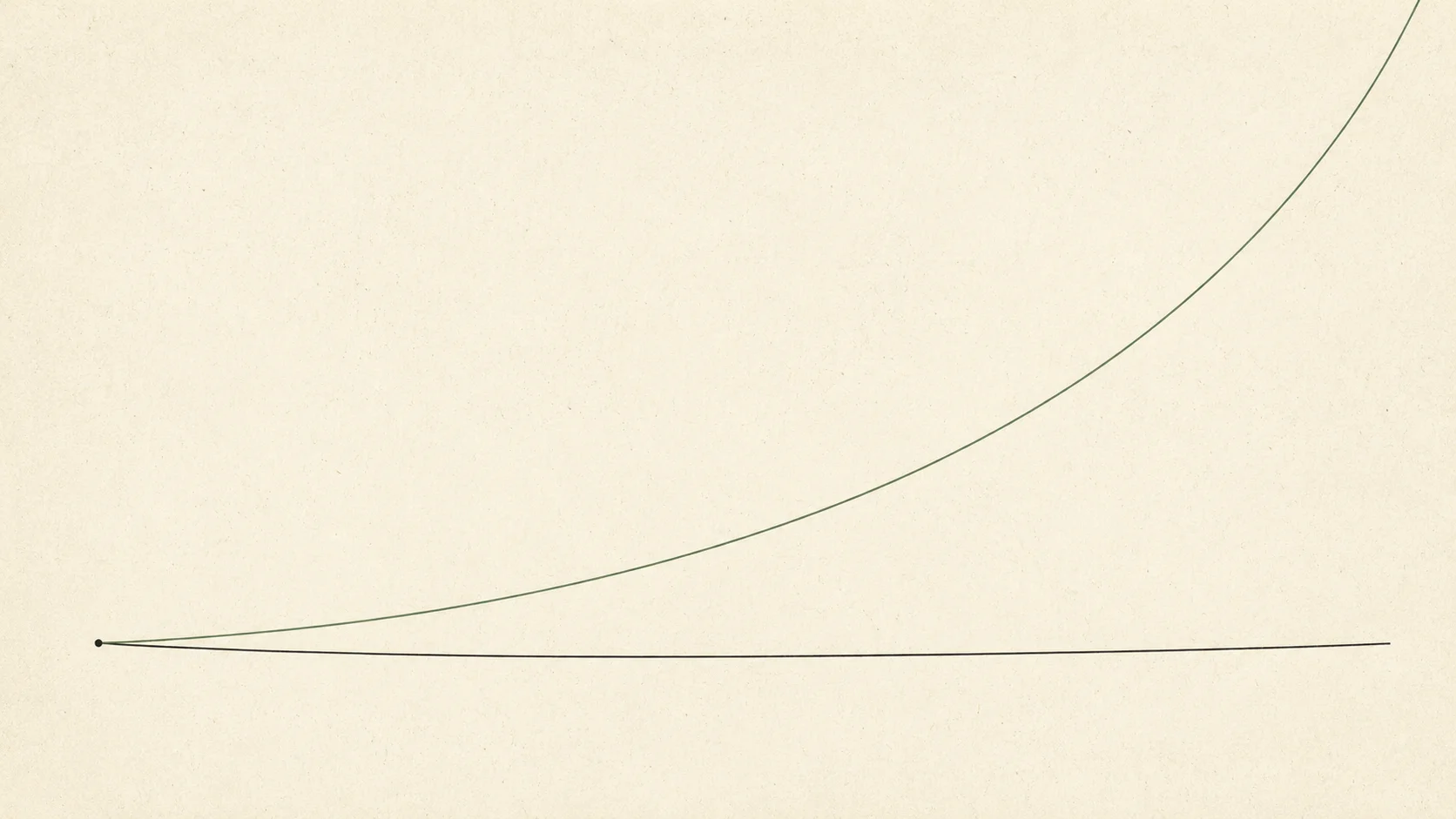
Most people expect AI to level the playing field. Give everyone the same tools, and the output converges. The gap between the best and the rest narrows.
The early data suggests the opposite.
AI does not equalize. It amplifies. And the people who bring clear thinking, structured judgment, and accumulated context to the interaction are pulling ahead faster than anyone predicted.
This is not a comfortable observation. But it is an honest one.
The amplification effect
Ethan Mollick's research at BCG and Wharton studied consultants working on identical tasks. Those who used AI outperformed those who did not by 40%. But the gains were not evenly distributed.
The consultants who benefited most were the ones who already had strong judgment about the task. They knew when the AI output was right and when it was subtly wrong. They knew which sections to keep and which to rewrite. They brought professional taste to the interaction. AI multiplied that taste.
The consultants who struggled were the ones who accepted AI output uncritically. They got fluent-sounding deliverables that missed the mark. Confident garbage, produced faster.
The same pattern appears in software engineering. GitHub Copilot produces 30-55% speed improvements on coding tasks. But the gains are highest for developers who already write clean, well-structured code. The tool does not teach clean architecture. It accelerates whatever the developer already does.
Reid Hoffman calls this "superagency." AI as amplifier of existing capability. Not a universal equalizer. A multiplier.
The multiplier works in both directions. Strong judgment gets multiplied into strong output. Vague thinking gets multiplied into vague output, delivered with more confidence and at higher volume.
Why the gap grows
The amplification effect alone would create a gap. But the gap does not just appear. It grows.
Top performers learn from their AI interactions. They notice when the output fails and adjust their approach. They develop intuitions about what works and what does not. They carry those lessons forward.
But here is the part that matters: most of them carry those lessons in their heads. They remember what worked. They re-explain their preferences each session. They hold the context mentally.
That works. Until it does not. The person who relies on memory to carry AI context hits a ceiling. They can only maintain so much context across so many tools for so many projects. The system does not scale beyond one person's working memory.
Meanwhile, the gap keeps compounding. Every good interaction builds on the previous one. Every correction that lands makes the next session slightly better. For people without a system to capture those corrections, the improvement curve flattens. For people with one, it steepens.
This is the structural reason the gap widens. Not because top performers are inherently better at AI. Because their approach compounds and others' approach does not.
Infrastructure, not talent
Here is the part that changes the diagnosis from depressing to actionable.
What top performers do with AI is not mysterious. They bring context. They apply judgment. They capture what works. The specific things they do can be listed:
They know their quality standards and can articulate them. They have decision frameworks they apply consistently. They notice when output misses their voice and can say specifically why. They correct errors and carry those corrections forward.
None of that requires exceptional intelligence. It requires a system.
Most top performers build this system intuitively, inside their heads. It works for them. But it is not transferable, not scalable, and not visible to others. An independent consultant might have twenty years of accumulated judgment about how to structure a client deliverable. That judgment lives in their professional instincts. It has never been written down.
Write it down. Put it in a file. Make it readable by an AI tool. Suddenly, that twenty years of accumulated judgment is available in every session, across every tool, without re-explaining. The judgment compounds structurally instead of just mentally.
This is what a context layer does. It takes the infrastructure that top performers build intuitively and makes it explicit, persistent, and portable. You do not need to already be a top performer to build one. You need the willingness to articulate your preferences, capture your corrections, and encode your judgment. That case is developed in full in the owned context advantage, and the practical argument for why non-technical professionals can build this without engineering skills is in non-technical people deserve serious AI infrastructure.
The raw materials are already in your head. The gap is in the infrastructure.
The honest forecast
The gap will widen. People with structured AI context will compound their advantage. People without it will keep resetting every session.
But the axis of the gap is infrastructure, not innate ability. Infrastructure can be built. A context layer is not a privilege of the talented. It is a system anyone can construct from their own accumulated experience.
The question is not whether you have good judgment. If you have been working professionally for any meaningful length of time, you do. The question is whether that judgment is available to your AI tools, or locked inside your head, re-explained from memory, forgotten between sessions.
Build the layer. PersonalOS is where to start. The compounding starts immediately.
Build your own context layer.
PersonalOS turns your judgment, taste, memory, and workflows into a portable system your AI tools can read.