The Performance Gap Is Already Here (And the Research Proves It)
In 2023, a team of researchers from Wharton, Harvard, MIT, and Boston Consulting Group ran a randomized study on 758 working consultants doing actual…
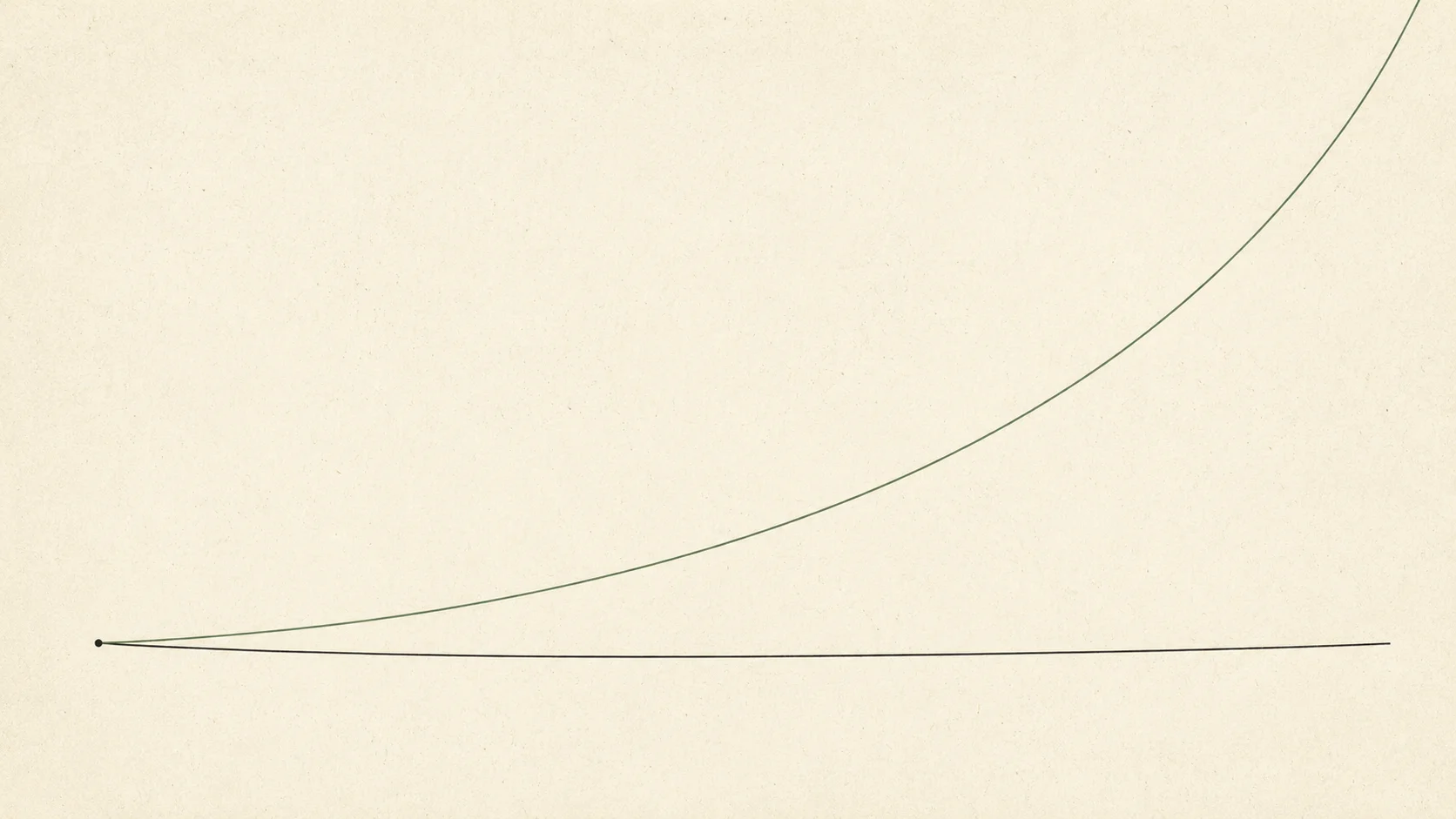
In 2023, a team of researchers from Wharton, Harvard, MIT, and Boston Consulting Group ran a randomized study on 758 working consultants doing actual consulting work. One group had access to GPT-4. The other did not. By the end, the AI-assisted group produced work rated 40% higher in quality, completed 12% more tasks, and finished 25% faster.
This is not a survey about attitudes toward AI. It is not a prediction about future displacement. It is a randomized trial on real work, conducted on real professionals, with results scored by people who did not know which group produced which output.
The reader who dismisses that finding is making a choice with a measurable cost.
One Study, Then Convergence
The BCG finding would be interesting in isolation. What makes it load-bearing is that it does not stand alone.
The paper — "Navigating the Jagged Technological Frontier" (Dell'Acqua, McFowland, Mollick, et al., 2023, SSRN working paper 4573321) — used 18 realistic consulting tasks covering creative work, analysis, writing, and persuasion. The randomized design controlled for skill differences between participants. The quality scoring was blind. Those are the design features that separate it from anecdote.
A second line of evidence comes from a different domain entirely. In "Generative AI at Work" (Brynjolfsson, Li, and Raymond, NBER Working Paper 31161, April 2023), researchers tracked 5,179 customer support agents through the staggered introduction of an AI-assisted conversation tool. Average productivity, measured by issues resolved per hour, rose 14%. The distribution matters: novice and lower-skilled workers improved by 34%. Experienced, higher-skilled workers saw minimal gains.
That finding runs counter to the standard displacement narrative. The workers most helped by AI were not the most experienced. But more on that in a moment.
A third source operates at a different level of rigor. Microsoft's 2024 Work Trend Index — an industry report, not peer-reviewed research — surveyed knowledge workers on AI use patterns and outcomes. The source type distinction is worth naming plainly: this is self-reported data from a company with a commercial interest in AI adoption. With that noted, the directional findings align with the academic work. Workers who used AI heavily saved over 30 minutes per day compared to under 10 for light users. Seventy-six percent of respondents believed AI skills were necessary to stay competitive. Only 39% had received any formal AI training from their employers.
Three independent sources. Three different methodologies. Three different industries and populations. One direction.
Why Complex Tasks, Not Routine Ones
The most common objection to AI productivity research is that it measures the wrong thing: that the gains are real but confined to routine, lower-skill work, and that the tasks which actually determine career trajectory are untouched.
The BCG study was designed to test that objection directly.
The 18 tasks in the study were not routine. They required synthesis, stakeholder communication, market analysis, and creative problem-solving — the kind of work that distinguishes a strong consultant from an average one. The study was not measuring whether AI could fill in a form faster. It was measuring whether AI could help a professional produce better thinking on genuinely difficult problems.
The results say it can. By a significant margin.
The Brynjolfsson et al. finding adds a related point from a different angle. The gains in customer support concentrated in synthesis tasks — navigating complex customer issues, finding relevant precedents, structuring responses to ambiguous problems. The routine parts of the job showed smaller effects. The cognitively demanding parts showed larger ones.
That is the pattern the research keeps surfacing: the gap between AI-assisted and non-AI-assisted workers is largest where the work is hardest. Not where it is easiest.
The Compounding Mechanism
Here is what the single-point productivity figures do not capture.
A 40% quality improvement in one study is a snapshot. What matters more is what happens over time. The workers already ahead are not holding a static advantage. They are using the output edge to do more, learn faster, and take on harder problems.
Every AI-assisted output is also an iteration. The consultant who completes a project 25% faster has time to run another draft, try a different framing, or take on a client problem they would have previously had to decline. That additional work is not just more output. It is additional practice, additional feedback, and additional refinement of the judgment they bring to the next engagement.
The ceiling keeps moving. Easier AI tools raise the floor — they make a basic level of AI-assisted output available to almost everyone. They do not close the gap between someone who has developed genuine fluency and someone who has not. The person who has learned to give AI enough context to work well on their specific problems, in their specific voice, against their specific constraints, continues to pull ahead even as the tools improve. Their advantage is not the tool. It is the accumulated context and judgment they have built around it.
This is why the "I'll learn when I need to" calculation is off in a specific way. The assumption behind it is that the gap is paused, waiting for the learner to catch up. The gap is not paused. It is compounding on the other side. Every month of deferred learning is a month of compounding for the people already ahead. The full dynamics of that amplification are worth examining separately.
Addressing the Methodological Objections
The studies cited here have real limitations. Acknowledging them is not a rhetorical hedge. It is the honest reading of the evidence, and it makes the remaining case stronger, not weaker.
On generalizability. The BCG study used actual consultants doing actual consulting tasks, which is a stronger design than a lab analogue. It does not automatically generalize to all knowledge work. A 758-person sample drawn from one firm's consulting force, working on tasks designed for a fictional shoe company, is not a universal finding. It is a well-controlled finding in one professional context.
The Brynjolfsson et al. study adds a second industry and a much larger sample (5,179 agents), but customer support is also a specific context with specific task structures. The cross-source convergence — same direction, different industries, different methodologies — is the reason to take the pattern seriously. Neither study alone is sufficient. Together, they describe a pattern worth acting on.
On replication and peer review. Both papers were working papers at the time of their primary circulation, which means they had not completed formal peer review. That is worth noting, not because it discredits the findings, but because it is accurate. Working papers from credible research teams with robust designs are meaningful evidence. They are not the same as a decade of replicated findings.
On tools equalizing. The most sophisticated version of the counterargument is that AI tools are improving fast enough that the gap will close on its own — that the 40% advantage will erode as models become more capable and easier to use. This is a reasonable prediction about the floor. It is not a reasonable prediction about the ceiling. Better tools help every user, including the ones who have already developed fluency. The person who has built a structured context layer, a set of persistent preferences, and a practice of giving AI accurate information about their specific work will continue to extract more from a better model than someone starting from defaults. The floor rises. The ceiling rises with it.
The Cost of Waiting
The "wait and see" posture has a specific structure. It assumes the current moment is a reasonable time to gather more information before acting, and that the decision can be revisited later without significant cost. Both assumptions warrant examination.
On gathering information: the research base is not definitive, but three independent studies pointing in the same direction is not a situation that typically resolves in the skeptic's favor with more time. More replication will arrive. It will not be contradictory.
On revisiting later: the cost of waiting is not neutral. It is a year of compounding on the other side — a year of the people already ahead using their output advantage to take on harder work, develop stronger judgment, and build context that accumulates. The gap is a ratchet. It does not reset when the latecomer decides to engage.
The research does not say that the current moment is the last possible moment to close the gap. It says the gap is real, it is already wide, and it is already widening. That is a present-tense condition, not a future risk.
Choosing not to act on that data is a decision. It is not the absence of a decision.
From Gap to Response
The performance gap is documented. The mechanism is understood. The question worth turning to is what actually closes it.
Platform access is no longer the distinguishing variable. Most knowledge workers already have access to capable AI tools. The WTI data bears this out: heavy users and light users are often working with the same tools. The difference is not access. It is fluency — specifically, the capacity to give AI enough context to perform well on your particular work.
AI fluency as a professional capability is worth examining in its own right, but the fluency-gap argument resolves to a specific structural point: what separates the 40%-ahead group is not the platform they use. It is the accumulated context they bring to it — their preferences, their decision patterns, their corrections persisting across sessions. That built context is not a product of having better tools. It is a product of having invested in building it.
The owned-context argument makes the case for why that context needs to live somewhere you control, rather than inside any single platform's memory system. The short version is that context locked inside a tool evaporates when you switch tools, when the platform changes its terms, or when a session ends. Context you own travels with you.
PersonalOS is the system we built for that purpose — a portable personal context layer, in plain files, that you control. The pitch here is deliberately short, because the article is not about PersonalOS. It is about the gap, which is real, measured, and already open.
The research is clear enough. What you do with it is the variable that remains.
Sources cited:
Dell'Acqua, F., McFowland, E., Mollick, E., et al. (2023). "Navigating the Jagged Technological Frontier: Field Experimental Evidence of the Effects of AI on Knowledge Worker Productivity and Quality." SSRN Working Paper 4573321. (Not yet peer-reviewed at time of citation; retrieved 2026-05-16.)
Brynjolfsson, E., Li, D., & Raymond, L. R. (2023). "Generative AI at Work." NBER Working Paper 31161. Stanford Digital Economy Lab. (Working paper; revised November 2023; retrieved via nber.org 2026-05-16.)
Microsoft & LinkedIn. (2024). 2024 Work Trend Index Annual Report: "AI at Work Is Here. Now Comes the Hard Part." Published May 8, 2024. (Industry report; not peer-reviewed; source type noted in text.)
Build your own context layer.
PersonalOS turns your judgment, taste, memory, and workflows into a portable system your AI tools can read.